RFID as the Digital ID Infrastructure of Robotic Systems
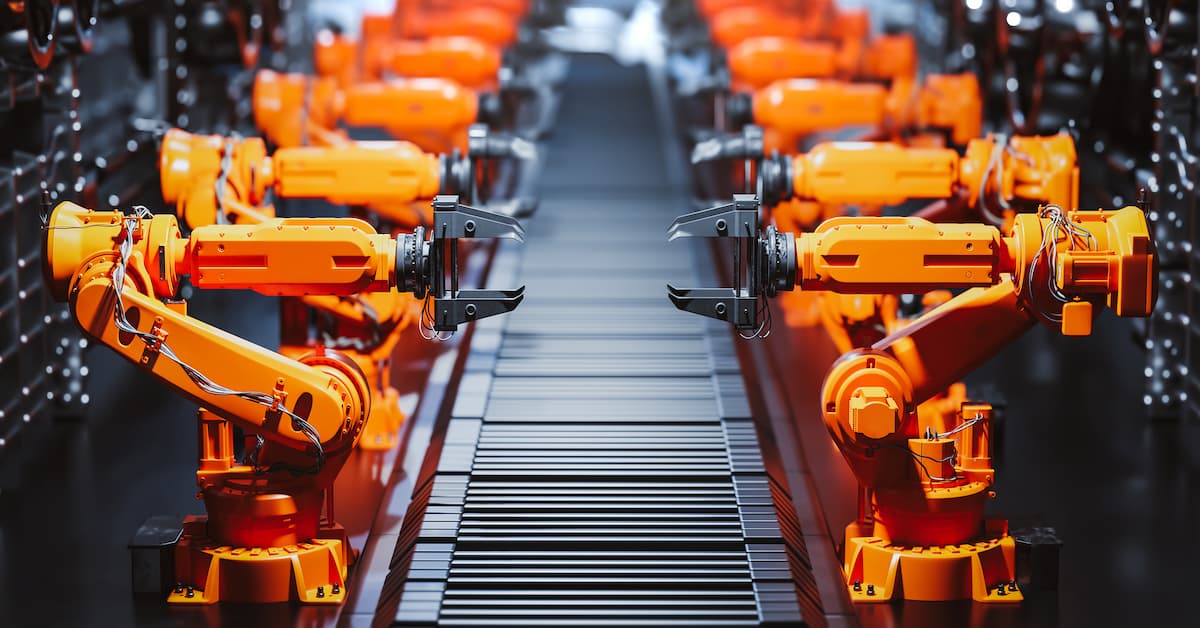
If one of the most profound transformations of the past two decades has been the digitalization of human identity—through ID cards, phone numbers, online accounts, and digital wallets—then the next two decades will witness a quieter but equally significant shift: machines are being systematically assigned identities of their own. As robots move beyond isolated tools and enter factories, warehouses, hospitals, city streets, and even homes—collaborating with humans and other machines—a fundamental question can no longer be avoided: how does a system know who a machine is?
In human society, this question is answered by identity cards, passports, and social identification systems. In the emerging robotic society, that role is increasingly being played by RFID. A robot without a stable, verifiable identity can only be treated as a replaceable device. Once it is given a recognizable and traceable identity, however, it becomes part of a managed system—subject to rules, permissions, and responsibility. Identity is the line that separates tools from participants.
In the early days of automation, robots did not need identities. A robotic arm performed fixed movements, an AGV predefined routes, and recognizing the individual machine was largely irrelevant. Today, this assumption no longer holds. Robot populations are growing rapidly, collaboration is becoming more complex, and robots are being deployed in open and semi-open environments. Systems must know which robot is executing a task, whether it is authorized to enter a restricted area, and who—or what—is responsible when something goes wrong. Under these conditions, identity has shifted from a “nice-to-have” feature to a foundational requirement.
Some may ask why IP addresses or QR codes are not sufficient. These solutions can work within limited, closed systems, but they are poorly suited to serve as the foundational identity mechanism of a machine society. IP addresses depend on network connectivity and are inherently changeable. QR codes require line-of-sight scanning and human or camera intervention, which reduces reliability in industrial and harsh environments. RFID, by contrast, offers contactless identification, strong uniqueness, physical embeddability, and environmental robustness. In practical deployments, identity recognition is typically enabled by a combination of RFID chips and uhf rfid antenna systems, allowing machines to be identified reliably without physical contact or human participation.
Within a robotic society, RFID is not merely a serial number—it is the physical root of a digital identity system. Each RFID chip carries a unique identifier that can be bound to a robot at manufacturing or during system onboarding. Even when a robot is offline, powered down, or partially disassembled, its identity remains intact. Around this physical anchor, backend systems build comprehensive mappings that link the RFID ID to model information, ownership, permission levels, operational status, and lifecycle stage. What begins as a number gradually becomes a role.
As robots operate within a system, their RFID identities are continuously recognized and logged. Entering controlled zones, participating in tasks, collaborating with other machines, or triggering abnormal events—all of these interactions are recorded. Over time, each robot accumulates a behavioral history comparable to a résumé or credit record in human society. This continuity of identity and behavior is what allows large-scale robotic systems to remain orderly rather than chaotic.
In smart factories, the value of robotic identity systems is already evident. Flexible manufacturing environments rely on dynamically assembled robot teams rather than fixed production lines. RFID identification allows systems to know exactly which robot is present at each workstation, prevents unauthorized equipment from accessing production processes, and enables precise traceability when quality issues arise. Responsibility is no longer vaguely attributed to “the system” but tied to specific machines.
In warehousing and logistics environments, robotic identity becomes even more tangible. Modern rfid warehouse management systems rely heavily on accurate, real-time identification of mobile robots operating across different zones. As robots move between storage areas, loading docks, and restricted sections, RFID checkpoints equipped with uhf gate reader devices can automatically verify identity and permissions, ensuring that only authorized robots enter sensitive or high-value areas. In this context, robots effectively “check in” and “check out” of physical spaces, much like human workers passing through access control gates.
As robots expand into public urban spaces, identity becomes even more essential. Delivery robots, cleaning robots, and inspection robots operating in cities must be identifiable, distinguishable, and accountable. RFID-based identity systems allow city management platforms to differentiate authorized robots from unknown or malfunctioning devices, distinguish local machines from external ones, and establish a foundation for urban-scale robot governance. This is not merely an efficiency issue—it is a matter of public order and safety.
In emerging business models such as robot leasing, sharing, and service-based deployment, robots are no longer just equipment but transferable assets. Damage, accidents, and misuse all require clear responsibility attribution. By combining RFID identity with behavioral records, machine accountability becomes technically feasible. Robots are no longer opaque black boxes but traceable entities with ownership and history.
Looking back at human history, identity systems have always accompanied social complexity. From memory-based recognition in primitive societies, to clan affiliations in agricultural societies, to standardized numbering systems in industrial societies, identity has been a prerequisite for governance. A robotic society is no different. Without identity, robots remain interchangeable components; with identity, they become manageable, trustworthy units within a larger system.
In the future, RFID-based identity systems will increasingly integrate with digital twins, blockchain, and AI-driven orchestration. Robots will have synchronized physical and virtual representations, tamper-resistant operational histories, and task assignments influenced by performance and reliability metrics. At that point, robots will not merely be used—they will be governed.
As machines enter society, identity can no longer remain a human-exclusive concept. What RFID enables is not just recognition, but the earliest form of social order in the machine world. It gives robots their first answer to the question “Who am I?”—and in doing so, marks the true beginning of a robotic society.
derechos de autor © 2026 Shenzhen Jietong Technology Co.,Ltd. todos los derechos reservados.

compatible con la red ipv6

 español


